Practice, freely.
Guided practice and your own session timing. Build a comfortable routine that suits you.
Pelvic-floor practice, considered.
A little time. Your full attention. Guided pelvic-floor sessions, thoughtful coaching, and a practice that belongs to you.
For iPhone & Apple Watch · Free to download
01THE PART YOU MAKE TIME FOR
Pelvic-floor practice deserves the same care as the rest of your routine. Orrum brings together clear guidance, gentle reminders and space to understand your own body.
No equipment. No audience. Just you.
02THE ORRUM EXPERIENCE
Know what to do, when to hold, and when to relax. A clear rhythm on your phone, with optional voice and haptic cues.
Get to know your pelvic floor, notice a gentle lift, and learn why a complete release matters. Clear guidance makes the first session feel less unfamiliar.
Technique cues · Practical lessons · Your own pace
Learn the essentialsFollow a guided session with clear timing, breathing cues, and optional sound or haptics. You bring the attention. Orrum brings the rhythm.
Guided sessions · Voice & haptics · Apple Watch
Start with awarenessSee the practice you have put in. Log symptoms if you choose. Notice what feels different over time, and bring useful observations to a conversation with your clinician.
Session history · Optional symptom logs · Personal goals
Understand progress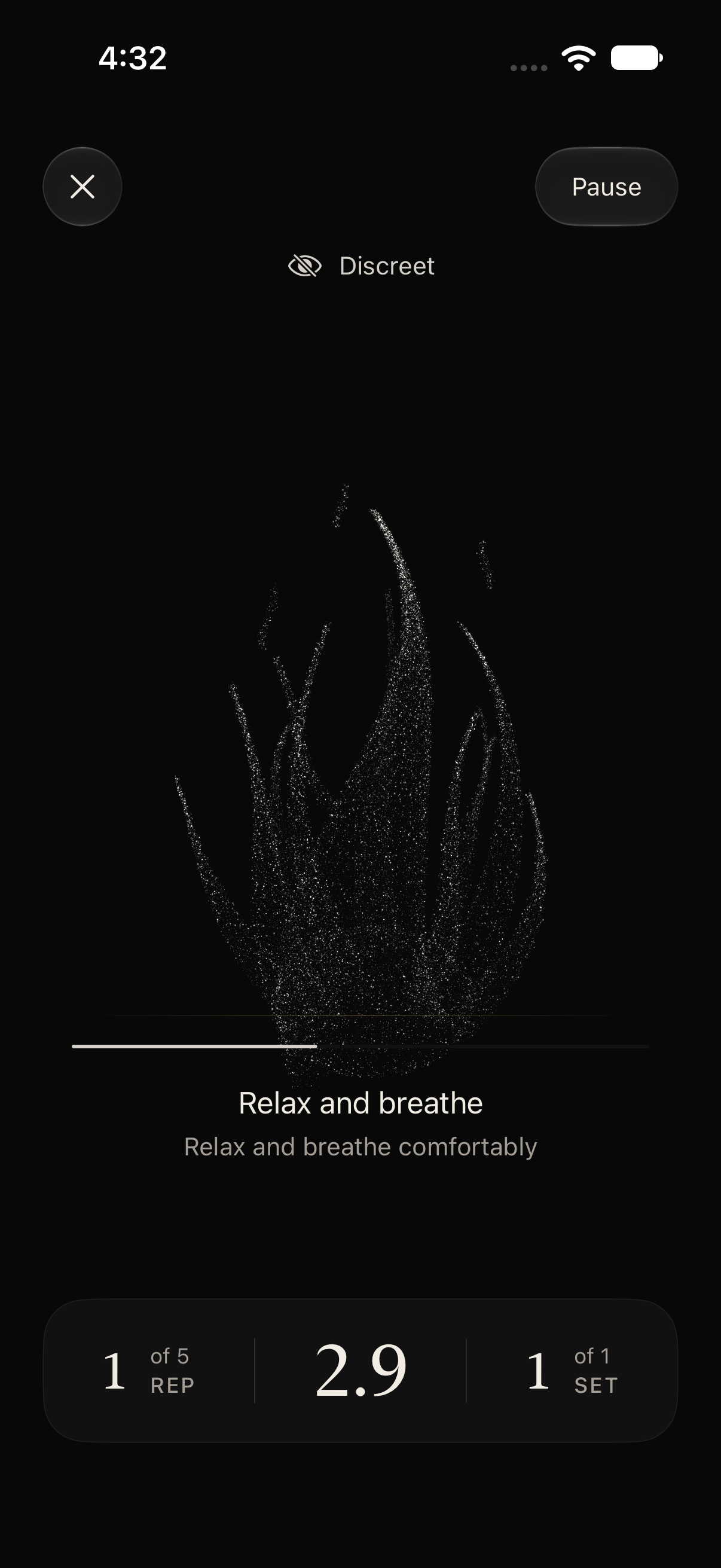
Guided sessions and your own timing.
Optional sound and haptic guidance.
A personal record, ready when you are.

Let your shoulders settle. Follow the light as it expands and softens, and breathe at a pace that feels easy.
This is a breathing preview, with no pelvic-floor contractions or breath holds. Follow your own comfortable pace, and stop if you feel dizzy or uncomfortable.
Free. No account. No saved breathing history.Find your own rhythm
Focus the player and press Space to start or pause, P to pause, and R to reset. The buttons also work with Tab and Enter.
03A PRACTICE OF YOUR OWN
New to pelvic-floor practice, returning after birth, or making it part of your everyday. Begin with what your body needs.
 01
01Learn the basics, find a routine that fits, and notice how your experience changes.
Explore the guide 02
02A gentler starting point, guided by your comfort and the advice of your care team.
Explore the guide 03
03Get to know the movement, use comfortable effort, and make time to relax fully.
Explore the guideGuided practice and your own session timing. Build a comfortable routine that suits you.
Choose optional health integrations and AI coaching with an understanding of what you share.
Education grounded in established pelvic-health guidance. Clear information, without promises of a perfect score.
Bring your questions to KAI for additional guidance and AI-generated plans, with clear usage limits.
Membership details and local pricing are shown in the app before purchase.
Download on the App Store“How can I tell whether
I’m relaxing fully?”
05THE READING ROOM
Begin with comfortable breathing and a simple body-awareness check.
Understand the difference between a gentle lift, a complete release, and doing more.
Make room for comfort, individual guidance, and a return that suits your recovery.
Make room in your week.
Free planning and reflection tools. No account needed.
The pelvic floor supports organs in your pelvis and helps with bladder and bowel control. Understanding the region can help you discuss which approach fits your body.
Imagine stopping wind and gently lifting inward. Keep your thighs, buttocks and abdomen relaxed.
Use a comfortable effort. Avoid holding your breath, straining, or pushing down.
Allow the muscles to return to rest. Relaxing matters just as much as squeezing.
Kegels can help some people with urine leakage. Pain, trouble relaxing, or symptoms that worsen call for individual guidance from a qualified clinician. More squeezing is not always the answer.
Technique reference: NIDDK Kegel exercisesUreters carry urine from the kidneys to the bladder. The urethra carries it out of the body. Their similar names describe different passages.
The bladder stores urine. The pelvic-floor region below it helps support pelvic organs. The bladder wall is not the same structure as the pelvic-floor muscles.
It can help you understand location. It cannot assess muscle strength, tell whether you are contracting correctly, or confirm recovery. Anatomy and surgical history vary.
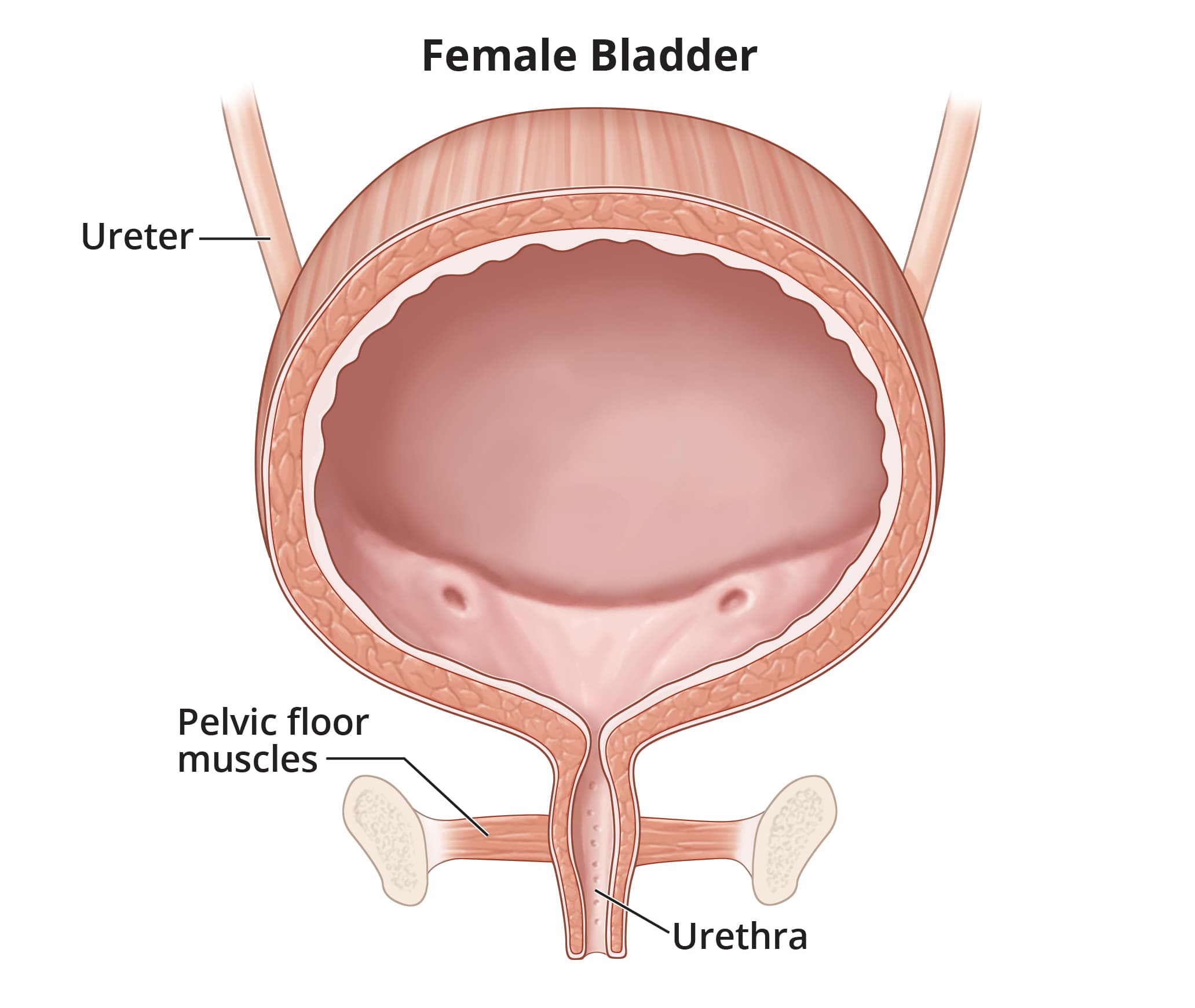
A simplified front-facing cutaway. Pelvic-floor muscles are labeled below the bladder; this is not a complete side view of the pelvis.
Orrum brings guided pelvic-floor practice, technique education, session history, and optional symptom tracking into one private routine. It helps you practice and notice patterns; it does not measure your muscle strength or diagnose a condition.
Yes. Pelvic health matters across genders. The right approach depends on your anatomy, goals, symptoms, and any medical guidance—not a gender stereotype.
Recovery is individual. Follow the advice of your midwife, doctor, or pelvic-health physiotherapist, especially after complications or surgery. Pain, heaviness, or worsening symptoms are reasons to pause and ask for guidance.
No. Some people need help relaxing or coordinating the pelvic floor rather than more strengthening. If you have pelvic pain, difficulty relaxing, or uncertainty about technique, an individual assessment is a better starting point.
Orrum is free to download. The app includes a core guided practice experience. Optional Pro membership adds KAI coaching and AI-generated plans with usage limits. The breathing preview and every guide on this website are free, with no account required. Check the App Store and the app for the current membership details.
When you choose AI coaching, your message and the relevant context you permit are sent through our service to Google Gemini to generate a response. Local practice does not need an AI request. The privacy policy explains accounts, optional integrations, and AI processing.
There is no universal timeline. The right practice, technique, consistency, and underlying cause all matter. Notice your own symptoms and comfort over time, and ask a professional if you are not improving or the approach feels wrong.
No additional equipment is required for the guided app experience or the breathing preview. Orrum is available for iPhone, with an Apple Watch companion. Availability and compatibility are listed on the App Store.
Guided pelvic-floor practice for your everyday.
Download on the App StoreFree to download · iPhone & Apple Watch